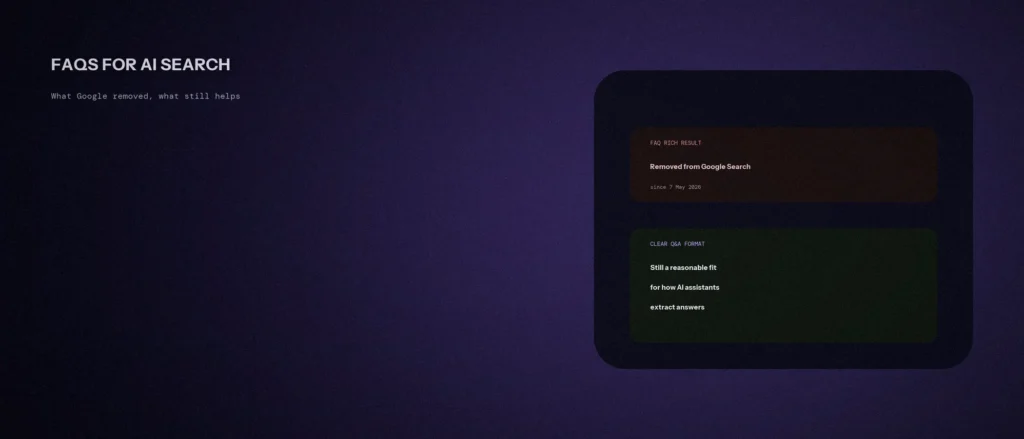
For years, one reason to add FAQ schema to a page was simple: it could win extra space in Google’s results, in the form of an expandable FAQ box. That reason is gone. Google confirms the FAQ rich result feature “is no longer shown in Google Search results,” and the documentation that explained it has been removed.
So does FAQ schema still work, and does an FAQ section still matter for AI search? The honest answer has two parts. For Google’s own results, the old benefit has ended. For AI answers, there is a reasonable case for clear FAQs, but Google’s own guidance is clear that you do not need special markup, and I will not oversell it.
Quick summary, if you’re short on time:
- Google stopped showing the FAQ rich result on 7 May 2026, and later removed its documentation. FAQ schema no longer earns an expanded box in a normal result.
- Google says there is no special markup you need for AI Overviews or AI Mode, and no extra requirements to appear in them.
- A clear question followed by a direct answer is still good writing. It helps readers first, and it is an easy shape for any system to read.
- Google has published no proof that FAQ schema changes how AI assistants cite you. Treat any claim of that kind as unproven unless it names a source you can check.
- If you keep FAQ schema, make sure it matches the visible text. Write FAQs for real reader questions either way.
Jump to a section:
- What FAQ schema is
- What changed at Google
- Does FAQ schema still work? A quick table
- What Google says about AI search and markup
- Why a clear FAQ section can still be worth writing
- What I can’t claim
- How to write FAQs that earn their place
- A prompt to draft your FAQ answers
- Questions about FAQ schema and AI search
What FAQ schema is
FAQ schema is a type of structured data, usually written in JSON-LD, that marks up the questions and answers on a page so that machines can read them as questions and answers. FAQPage is one schema type among many, alongside types like Product, used on product pages, and Organization. It comes from schema.org, the shared vocabulary that every search engine and other systems use for structured data.
It is added in the page’s code, not shown to visitors. The visible FAQ section is what people see. The schema is a hidden copy for machines. On this site, the schema is generated from the same questions you see on the page, so the two always match. That matters, because markup that does not match the visible text is a problem for any search engine.
What changed at Google
Google’s own changelog confirms the removal in plain terms. In May 2026 it added a notice that the FAQ rich result feature would no longer appear in Google Search starting 7 May 2026. A later entry removed the documentation for it, explaining that the feature “is no longer shown in Google Search results.”
In practical terms, after this update, adding FAQPage markup will no longer get you the expanded FAQ box in a regular result. The specific reason many sites added it has stopped applying.
Does FAQ schema still work? A quick table
The question depends on what you mean by “work.” Here is the situation in each place.
| Where | Does FAQ schema still help? | What we know |
|---|---|---|
| Google rich results | No | Google removed the feature and its documentation |
| Google AI Overviews and AI Mode | No special benefit claimed | Google says no special schema or extra requirements are needed |
| Other AI assistants, such as ChatGPT | Unproven | Google’s guide does not cover them, so treat claims as unproven |
| Your readers | Yes, as a visible FAQ section | Clear questions and direct answers help people |
So for SEO, the schema itself has lost its main reward. The FAQ section is still worth having, but for readers first.
What Google says about AI search and markup
Google has written a guide on how its AI features work from a site owner’s view. Its main points matter here:
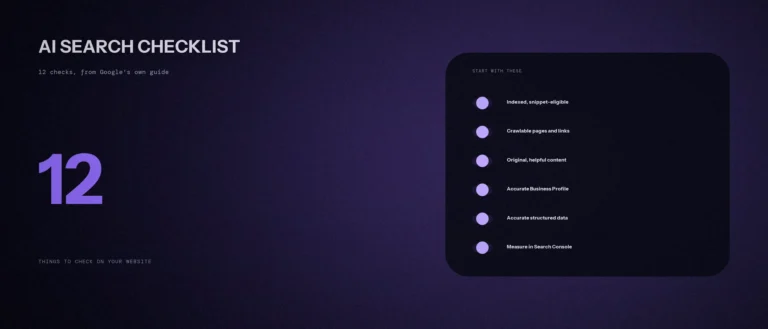
- The best SEO practices still apply to AI features in Google Search. There are no additional requirements to appear in AI Overviews or AI Mode, and no other special optimizations are needed.
- To be shown as a supporting link, a page must be indexed and eligible to appear in Google Search with a snippet.
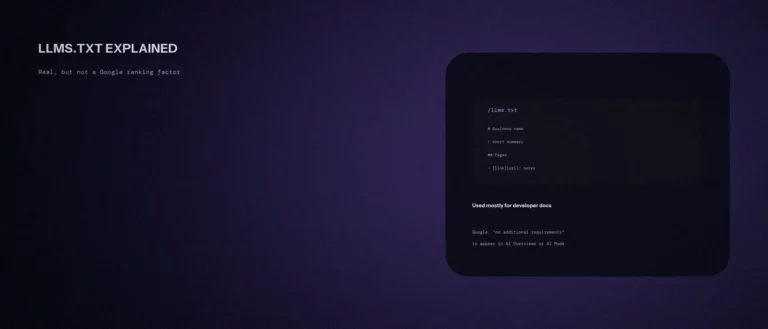
- You do not need new machine-readable files, AI text files or markup to appear there. Google also says there is no special structured data that you need to add.
- You do not need to break content into tiny pieces for AI, or write in a special way just for AI tools.
- Structured data is still a good idea as part of your overall SEO, because it helps with eligibility for rich results that do still exist.
That is a direct answer to the common claim that FAQ schema is a ranking trick for AI search. For Google, it is not. If someone sells you FAQ schema as a way to get into AI Overviews, ask them to show Google’s statement. It says the opposite.
Why a clear FAQ section can still be worth writing
An FAQ section that people use is good content in itself. A short question followed by a two or three sentence answer lets a reader get what they need in seconds. That helps your visitors, and Google says it wants content written for people.
It is also the shape other tools find easy to read. An AI assistant answering a question pulls text from a page and presents the part that answers it, often with a citation. A page with clear, self-contained answers is easier to work with than a long paragraph the system has to summarize. Our post on writing content that is easy for AI systems to extract covers the same idea for a page’s main content.
Notice what that argument is and is not. It says FAQ formatting fits how these systems read and costs you nothing beyond writing good answers. It does not say it earns a citation.
What I can’t claim
I want to be straight about the limits, since a lot of SEO writing overstates this point.
- No official Google statement says FAQ formatting or FAQ schema improves AI Overviews. The guide says the opposite about special markup.
- Google has published no evidence that FAQ markup improves AI citation or AI visibility. Any post that makes the claim should name a source you can check. If it does not, I would not repeat its numbers.
- The reasoning is sound, but it is reasoning. AI systems are built to extract clear answers, and a clear FAQ answer is easy to extract. That is a logical connection, not a measured result.
- Other assistants may behave differently. Google’s guide covers Google Search only, so it says nothing about ChatGPT or other AI systems.
So the honest version is: FAQ writing fits how these systems work, and it is worth doing for your readers. It is a sensible bet, not a proven tactic.
How to write FAQs that earn their place
- Use real questions. Pull from Search Console queries, sales calls, and what customers ask. Our post on what questions your buyers ask AI assistants has more on finding these.
- Answer in the first sentence. Do not build up to the answer. State it, then add detail.
- Keep each answer self-contained. A reader should understand the answer without reading the rest of the page.
- Only use facts already true in the post. An FAQ answer that contradicts the main content undermines both.
- Aim for 5 to 6 real questions, not a padded list of three obvious ones. Vary the type: cost, mistakes, comparisons, not just “what is X.”
- If you keep FAQ schema, make it match. On WordPress, some SEO plugins can generate it from an FAQ block, so the two stay in sync. Every question and answer in the markup should appear on the page. You can check the syntax with the Schema Markup Validator at validator.schema.org.
A prompt to draft your FAQ answers
Drafting the first version of an FAQ answer is a good use of an AI tool, as long as you check every fact yourself. Fill in your topic, and only keep what is true.
Act as an editor who writes short, direct FAQ answers.
My topic: [the subject of the page or post]
Real facts I can confirm:
– [fact 1]
– [fact 2]
– [fact 3]Real questions customers ask about this: [list them, or say I am not sure]
Please do the following:
1. Suggest 6 FAQ questions a real customer would ask, mixing cost, mistakes and comparisons.
2. Write each answer in two or three plain sentences, with the direct answer in the first sentence.
3. Mark any answer that needs a fact I have not given you, so I can fill it in.Rules:
– Only use the facts I gave you. Do not invent numbers, prices or results.
– Write in plain, simple English, with no jargon.
– Do not promise rankings or citations.
Read every answer against your own page before you publish it. If the facts are not already on the page, add them to the page first.
Questions about FAQ schema and AI search
Does FAQ schema still work?
Not for Google’s FAQ rich result, which was removed on 7 May 2026. It still works as valid structured data, so it does no harm if it matches your visible text. But it no longer earns the expanded box, and Google says no special schema is needed for its AI features.
Is FAQ schema worth adding in 2026?
Do not add it expecting a ranking or citation boost. Write the FAQ section for your readers. If your site already generates schema from the visible FAQs, keeping it is fine, as long as the two match. I would not spend extra time on it.
How do I write FAQs for AI search?
Write them for people. Use real customer questions, answer in the first sentence, and keep each answer clear enough to stand on its own. Google’s guide says you do not need to write in a special way for AI systems, so good plain writing is the whole job.
How do I check my FAQ schema?
Use the Schema Markup Validator to check that the markup reads correctly. Then compare it with your page. Every question and answer in the markup should appear in the visible FAQ section, with the same wording.
Does schema markup guarantee a place in AI Overviews?
No. Google says a page must be indexed and eligible to appear in Google Search with a snippet, and that there is no special schema you need to add. Meeting the requirements does not guarantee that a page will appear either.
Should I remove my existing FAQ schema?
There is no need to rush. It does not help you in Google’s results any more, but it is harmless if it matches your visible FAQs. If it no longer matches the page, fix it or remove it. Markup that disagrees with the visible text is worse than none.
Where this matters
An FAQ section is still worth writing, because it makes your page easier for people to use and easier for any system to read. The schema behind it is no longer the prize. If you want help turning your service pages into clear, citable content, our AI SEO and GEO service starts with what Google and the AI assistants say, not with tricks.